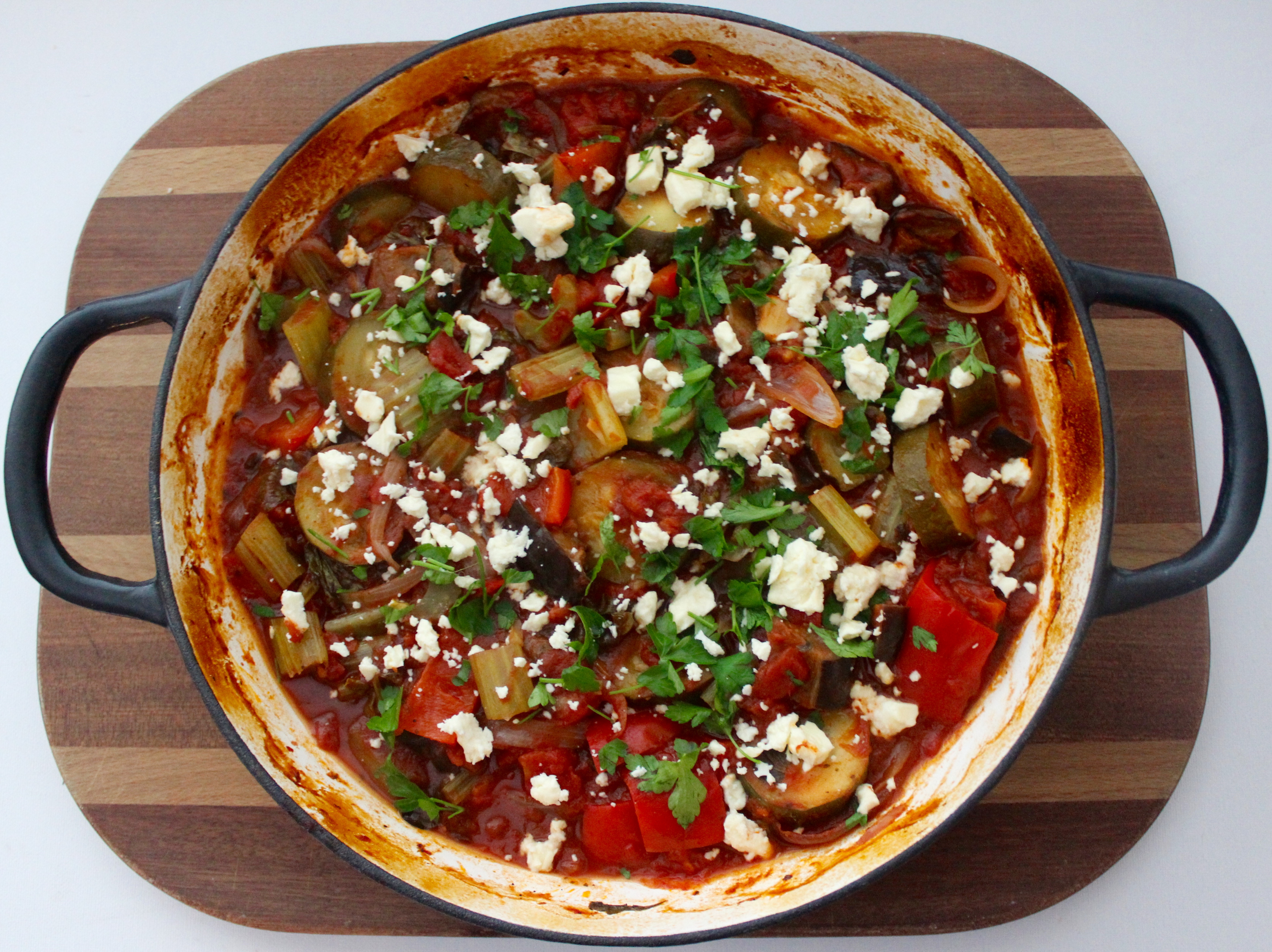
Balsamic Ratatouille with Feta (vegetarian)

One of the most common questions I get asked is “How can I get X to eat more vegetables?”

And it’s not just children that we are talking about.

It surprises me sometimes that there are just as many fussy adult eaters walking around who have a long list of vegetables they won’t eat.

Most of us are aware that it’s good to aim for 5 serves of veggies a day and yet most of us are probably falling far short of that benchmark.

It seems like a lot doesn’t it?

As a parent of small children, it can feel overwhelming and disheartening when 6 nights out of 7, the dinner plate is pushed away by fussy eaters as they say ‘yuck’ to the array of colours and textures on their plate.

In our family, we have had the meat and carbs lover who had broccoli put on his plate every night for about 4 years until one day he just ate it without a fight.

We have had the ‘everything needs to be separate’ child, who won’t eat casseroles, soups, sauces or anything that is mixed.

We have had the raw veggies stage, where nothing was allowed to be in a cooked state and we have had the many, many nights where kids have gone to bed hungry because they have refused to eat anything put in front of them.

Sound familiar?

Well, things are definately getting easier as they get older and if I can offer encouragement to mums of young fussy eaters, then this is what I would say:

1. Persevere – nothing about raising kids is easy. They come into the world knowing nothing and bit by bit, it’s our job to guide, instruct, teach and model how to live. This includes how to care for our bodies and how to eat well. It’s not for the faint-hearted, so be kind to yourself. Leave mother guilt at the door and just keep on at it.

2. Variety is the spice of life – if you are stuck in a rut of what is on offer in your house, that’s okay. Go for small changes, like aiming to try one new recipe a month. Next time you walk through the fruit and veggie store, make yourself buy one vegetable you’ve never bought before and go home and google what to do with it!

3. Partner the new with the old – if your child loves sausages, and you are wanting to try a new vegetable, offer both at the same meal. They will sit to eat what they know and love and then chat about trying a mouthful of something new at the same time.

4. Never say Never – kids tastes change over time, as do ours. Just because they wouldn’t eat avocado at 3 doesn’t mean you never try again. By the time they are 5, they might be ready to give it another try.

5.  Try a new method of cooking the same old vegetable – everyone gets tired of the same old thing over and over again eventually. If you only ever boil carrots, try roasting them instead? If you only ever steam cabbage, keep it raw and use each leaf as a wrap for some mince?

6. See Tip 1 again – Persevere. A bit like most things in life of any value, it takes time and effort and isn’t always easy. Hang in there.

Ratatouille, is not just a PIXAR movie that kids love, but it’s a french provincial dish of mixed stewed vegetables. It’s a perfect winter dish and only requires some chopping on your part, the oven does the rest of the work for you.

If you use the recipe below as a side dish, you will probably get 2 meals out of it. It freezes really well, just freeze without the cheese added at the end.

I can eat a big steaming bowl of this on it’s own for dinner, maybe with a piece of toasted sourdough. It will serve approx 4 if you make it a meal in itself.

IMG_6079

Ingredients

2 tablespoons of olive oil

1 spanish onion, peeled and chopped into wedges

2 cloves garlic, peeled and squashed with a back of a knife, but kept whole

2 medium zucchini, cut into chunks

1 red capsicum, de-seeded and cut into chunks

1/2 medium eggplant, cut into chunks

2 sticks celery, including leaves, cut into chunks

A large handful of fresh oregano (dried is fine, use a tablespoon)

800gm diced tomatoes

1 tablespoon balsamic vinegar

Pepper to season

Feta or Goats cheese and chopped parsley to serve

Method

Preheat oven to 150 degrees celsius.

Heat olive oil in an oven proof pan over a gentle heat on the stove.

Add onion and garlic and gently sauté until soft.

Add all of the other ingredients, except the cheese and parsley, and place a lid on the pan.

Place in the oven and cook for 1 1/2 hours.

Garnish with cheese and parsley and serve with toasted sourdough or alongside your protein of choice.

IMG_6112


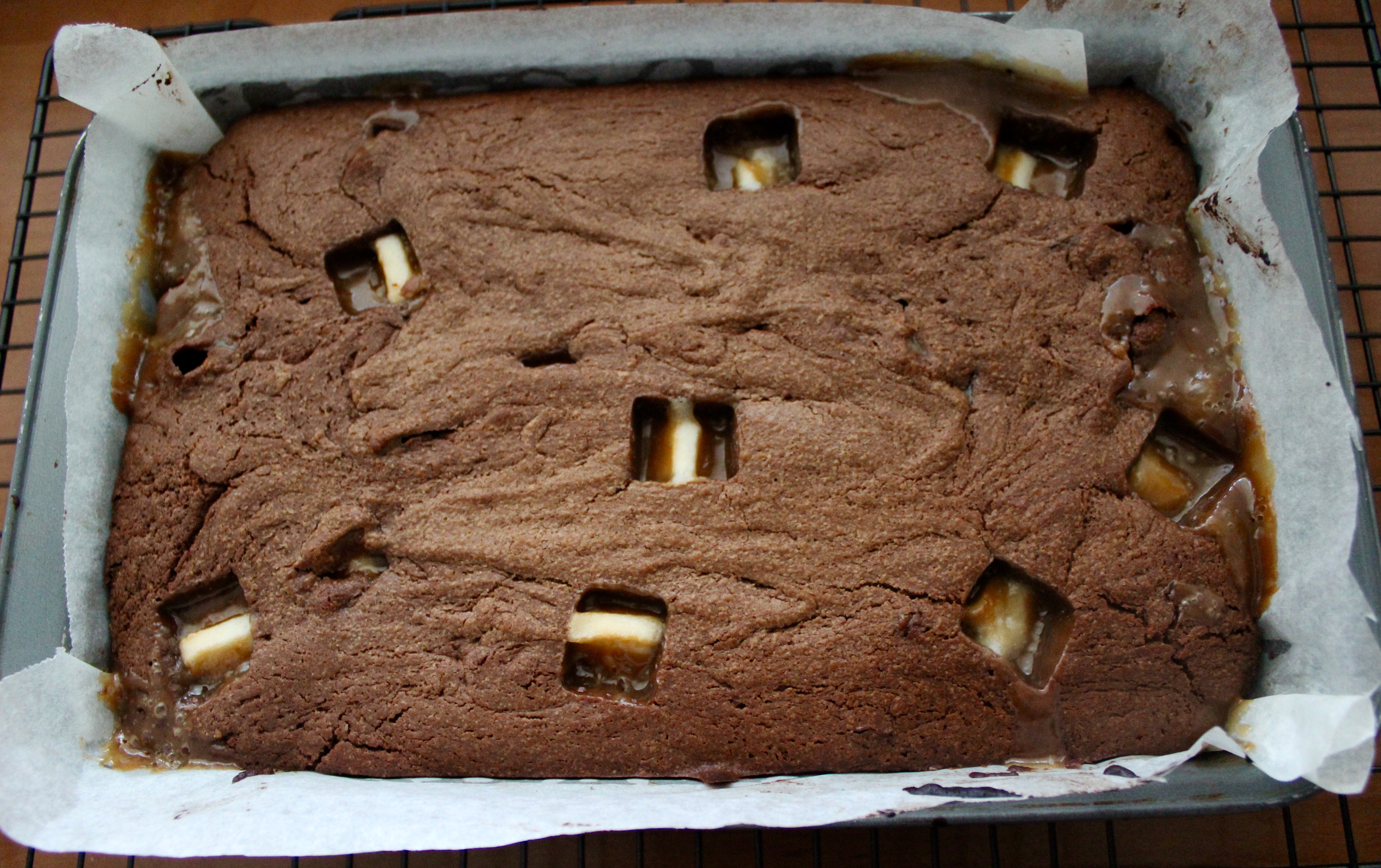
Jersey Caramel Brownies

This is the kind of recipe that doesn’t need much of an explanation.

Generally, most brownies are a MELT and MIX kind of affair. They are a great start for young keen bakers wanting to learn the basics of measuring, melting and mixing. A basic brownie recipe was one of the first things I showed my eldest son.

Very easy to over cook, it’s always best to set your timer for just under and test to see the brownie is still a little ‘fudgy’ on the inside. There’s nothing worse than an over cooked brownie.

Stating the obvious, there is absolutely nothing good or nutritious about this recipe.

They just taste delicious and are a sure fire way to my boys hearts. The jersey caramels melt a little during cooking and then as the brownie cools, the caramel re-sets, swirled through the brownie with a thick chewy consistency.

Ingredients

175gm unsalted butter, chopped

200gm good quality dark chocolate, chopped (if you use cheap cooking chocolate, you can tell!)

1 cup brown sugar

3 eggs

1 2/3 cups plain flour

200gm jersey caramels, chopped in half

Method

Preheat oven to 180 degrees celsius, (160 degrees fan forced).

Line a slice tin with baking paper, with some extending over the edge so you can lift the brownie out easily.

Melt the butter and chocolate together in the microwave. Do this in 1 minute bursts, stirring in between each minute. Be careful not to burn it at this stage. Cool slightly.

Stir in the remaining ingredients and mix well.

Pour into the pan and cook for 30 minutes, but as every oven is different, check it with 5 minutes to go, in case it’s over cooking. The top should be quite hard and set, but if you inserted a skewer, it would come out with a few moist crumbs clinging to it.

Cool in pan before lifting out and cutting into squares.

This will last for a week in an airtight container in the fridge.

It’s never lasted a week in this house.

IMG_5656

Coconut Berry Chia Puddings (Dairy free, gluten free, refined sugar free)

My husband and I recently enjoyed a break away in beautiful Fiji to celebrate a special wedding anniversary. I’m not sure where the last 15 years have gone, but in what seems like a blink of an eye, we found ourselves enjoying some time by ourselves on the golden sands of Fiji, resting, reflecting and celebrating.

The beautiful spirit of the Fijian people just blew us away. An attitude of thankfulness and blessing flowed out of every one we met, despite having almost ‘nothing’ in terms of our standards here in Australia. From the little that we saw in the time we had, it was obvious that their priorities in life are their faith, providing on a daily basis the needs of their family for food and shelter, sharing all that they ‘earn’ each day with the people in their village. The highlight of their day is coming together to eat and celebrate, everyone contributing something, and everyone keeping an eye out for each other. They greet everyone regardless of whether they know them or not, making sure everyone feels welcome around them. They sing in almost any and every situation and the phrase that they are known for and which we came to love, is “No Hurry, No Worry.”

As we’re settling back into our full and crazy life, we are trying to remember some of these attitudes that contribute towards the Fijians being named ” The Most Happy People on Earth” (this quoted to us by many while we were there).

Our houses may be bigger, our food more fancy, our schedules more full, but I couldn’t help but come home, mulling over these ‘happy’ people and their way of not only simply ‘living’ but ‘enjoying’ life as they go about the journey.

On a few occasions I got the privilege of starting my day with a juicy, fresh drink of coconut water. Straight from the tree, the water from this young coconut was so refreshing and beautiful to drink. I know you can buy it in the supermarket these days, probably for a small fortune, but it just doesn’t quite taste the same as straight from the tree!

The Fijians drink it every morning and if they are going to work in the field all day harvesting sugar cane, they will simply take a coconut. That is what they will eat and drink to sustain them for the entire day of hard labour.  They call it their ‘natural sports drink.’

When you research the claimed health benefits, you can see that natural coconut water is quite an amazing drink with many health benefits, however, if you are not doing a lot of physical exercise and the supermarket variety is full of added sugar, you are probably better off with drinking plain water.

I think if I had a coconut tree in my yard and one of my boys could bring me one every morning, I would definitely drink it most days. But until that happens, I’ll stick with water as my drink of choice.

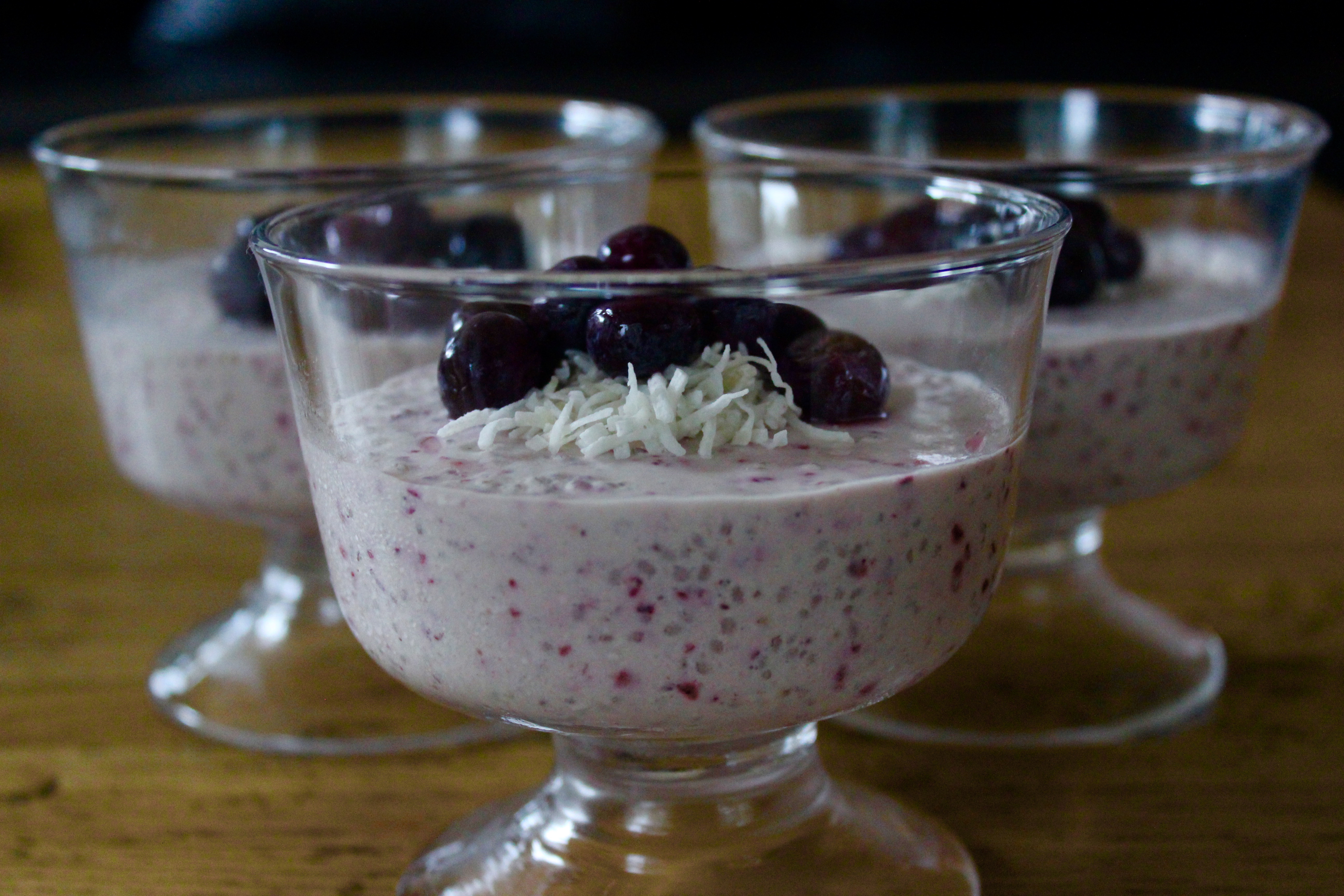
These Coconut and Berry Chia Puddings are an exceptionally easy dessert to make, with only 4 ingredients, they are low in sugar and are gluten and dairy free. Chia seeds are a great addition to any diet, high in omega 3 fatty acids, fibre and antioxidants, they are the ‘setting’ agent in this dessert, which my boys call ‘Berry Jelly’.

There are many versions of this dessert around the place at the moment, but this one I got from The Beauty Chef,  www.thebeautychef.com

You can make this with any berry of choice or a mixture of your favourite berries.

Serves 4

Ingredients

1 cup coconut cream or coconut milk

1 cup frozen blueberries or raspberries or a mixture of both (you could use fresh berries, it will just take longer to set)

1 tablespoon of maple syrup

1/4 cup white chia seeds

Berries and shredded coconut to serve

Method

Combine coconut cream, berries and maple syrup in a food proccesor and blend until smooth.

Combine this mixture with the chia seeds, stir well.

Pour this mixture evenly into 4 dessert glasses and refrigerate until set and the chia seeds have absorbed all of the liquid. This will take at least 4 hours.

Serve with berries and coconut.

IMG_5649

Roasted Pear, Brussel Sprout and Halloumi Salad

If there is a vegetable that has been left on the shelf for far too long, neglected and over-looked…it’s the Brussel Sprout.

This incredibly nutritious vegetable is related to broccoli, kale and cabbage and is in season now and during winter.

High in protein, vitamin C, vitamin K, vitamin A, fibre, iron, potassium and many other vitamins and minerals, they are known for helping in the fight against different types of cancer, maintaining good bone and eye health, and help to fight auto-immune diseases with their anti-inflammatory properties. In summary, they are one of the most nutritious vegetables you could eat!

Brussel Sprouts have been given a bad rap mainly due to the fact that most people have only ever eaten them boiled to death, where they lose all colour, texture and flavour.

But instead of just giving up on this small, round nugget of goodness, why not try preparing it and serving it in a different way?

Remove all the leaves and keeping them raw, toss through a salad with a nice dressing. Chop into quarters and lightly fry in olive oil, add some cooked bacon, lightly steamed kale and roasted nuts for a yummy side dish.

Or try this salad.

This salad has ‘autumn’ written all over it.

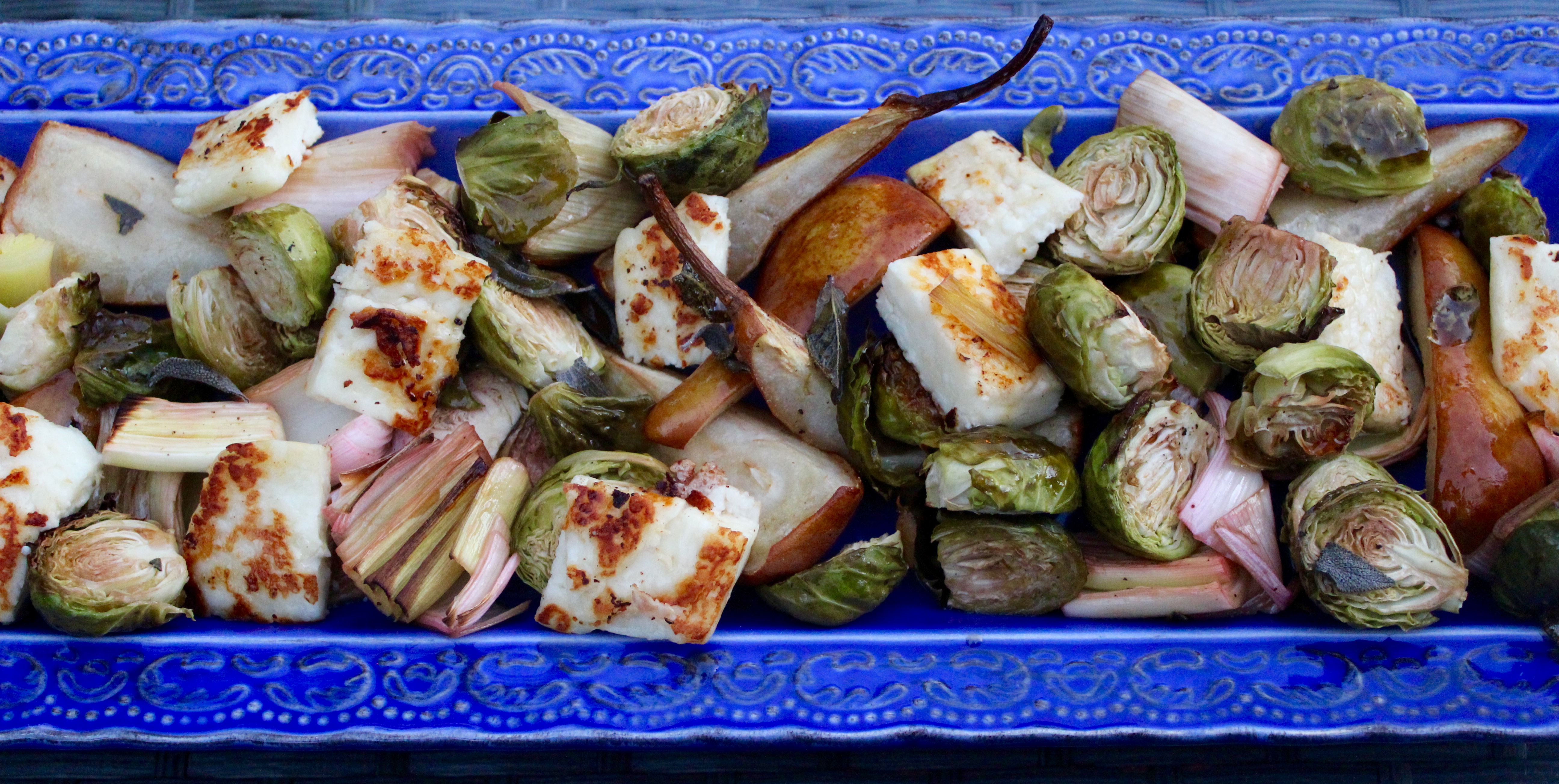
Buerre Bosc pears, leeks, sage leaves and brussel sprouts, drizzled with red wine vinegar and roasted till golden. Add some goats cheese, feta, or in this instance, halloumi, and you have a pretty special salad. You need a salty style cheese to balance the sweetness that comes out of those roasted leeks and pears.

We enjoyed this salad on a weekend recently. It was a chilly autumn evening and we were having a fire pit outside with our boys.

On a side note, the $80 we spent on a fire pit from Bunnings a few years ago has well and truly paid off. There’s something about a fire that draws everyone together. We get some awesome conversation, often for hours, from our boys as soon as it’s lit.

Family time, a piece of steak, this salad and a glass of red = happiness for me.

The original idea for this recipe came from Donna Hay’s cookbook Fresh and Light.

Ingredients

500gm brussel sprouts, trimmed and halved

2 Buerre Bosc (brown) pears, cut into wedges

1 leek, white part only, chopped into 2-3cm pieces

fresh sage leaves

2 tablespoons of olive oil

1/4 cup red wine vinegar

200gm Halloumi cheese, pan fried till golden and chopped into small pieces (Feta or Goats cheese works well also. Just crumble over the vegetables before serving.)

Method

Preheat oven to 200 degrees celsius.

Line a large baking tray with baking paper.

Place cut brussel sprouts, pears, leeks and sage leaves on tray.

Drizzle with olive oil and 1/2 of the red wine vinegar.

Season with pepper and roast for 30 minutes.

Place on a platter and add the pan fried halloumi.

Pour over remaining red wine vinegar and serve.


Slow cooked Chicken Cacciatore

It’s funny how some recipes come about.

This one does not have a very spectacular story.

It was a very normal day. I was feeling a little rushed, a bit tired and not overly motivated to think about dinner… AGAIN.

Yep, I have those days.

I was cleaning out the bottom of the fridge, you know, where you find 1/2 a zucchini that had seen better days, some slightly floppy celery and other bits and pieces that we’re too good to throw away but didn’t seem enough to make a special meal on their own.

I threw those bits and pieces into the slow cooker with a whole chicken and hoped that come dinner time, there wouldn’t be too many complaints.

IMG_5469

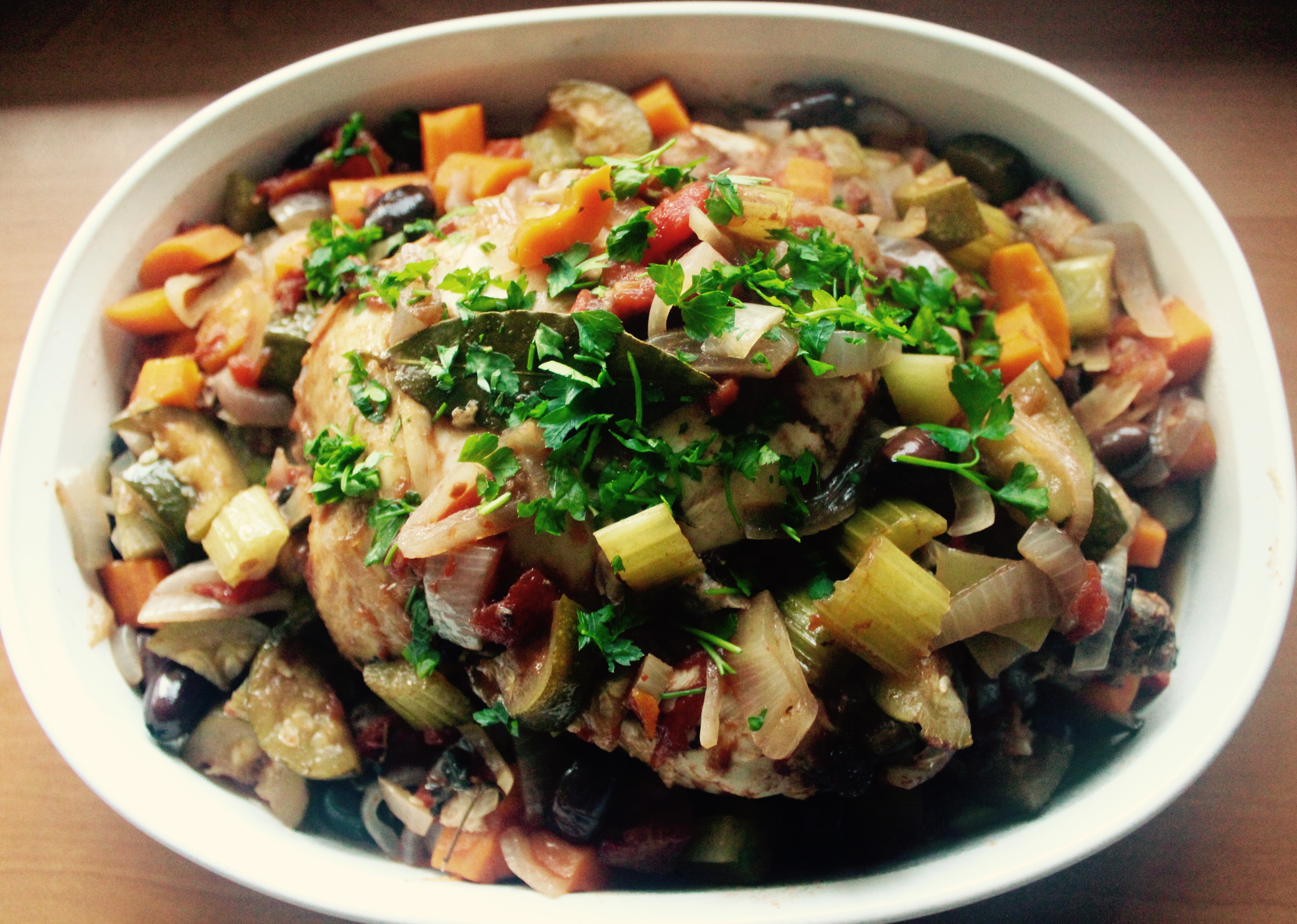
What turned out was a very simple and humble meal of moist chicken, softly cooked vegetables and a nice chicken broth that we used some crusty bread to soak up.  I placed the dish with the whole chicken, veggies and broth in the middle of the table with some tongs, a loaf of warm crusty bread on a board and told the family to help themselves.

Whole chooks are such a good way to feed a family. They are not expensive, and often there is some meat left over for lunches the next day.  Our family love a Roast Chicken dinner (which will end up on the blog some day) but I do often throw a whole chook in the slow cooker for an easy make-ahead meal.

I have a few other favourite recipes for slow cooked whole chickens that I will post soon.

Ingredients

1 whole raw chicken, excess skin removed from around the neck area. Give the inside of the chicken a good rinse.

1/2 a lemon

2 carrots, roughly chopped (don’t even bother peeling them)

1 spanish onion, peeled and roughly chopped

2 sticks celery, roughly chopped

1 zucchini, roughly chopped

1 400gm can diced tomatoes

3 tablespoons Balsamic Vinegar

2 tablespoons tomato paste

2 bay leaves

a handful of fresh oregano leaves (or a few teaspoons of dried)

1/2 cup pitted Kalamata olives

Flat leaf parsley to serve

Method

Place the lemon half inside the cavity of the chicken.

Throw all of the other above ingredients in the slow cooker and cook for approximately 4 hours. (Low for 6 hours or High for 3-4)

Serve in a big dish, garnished with chopped parsley, straight to the table with some warm crusty bread to soak up all the juices.